
Keep Every Account You Manage Safe, From Storage to Sharing
Isolated profiles, encrypted storage you control, and session sharing without passwords. Everything you need to run many accounts without putting any of them at risk.
- Avoid bans & account suspension
- Automate browser tasks
- Easy-to-use interface
- Trusted by 1 million+ users
Managing Many Accounts Creates Many Weak Spots
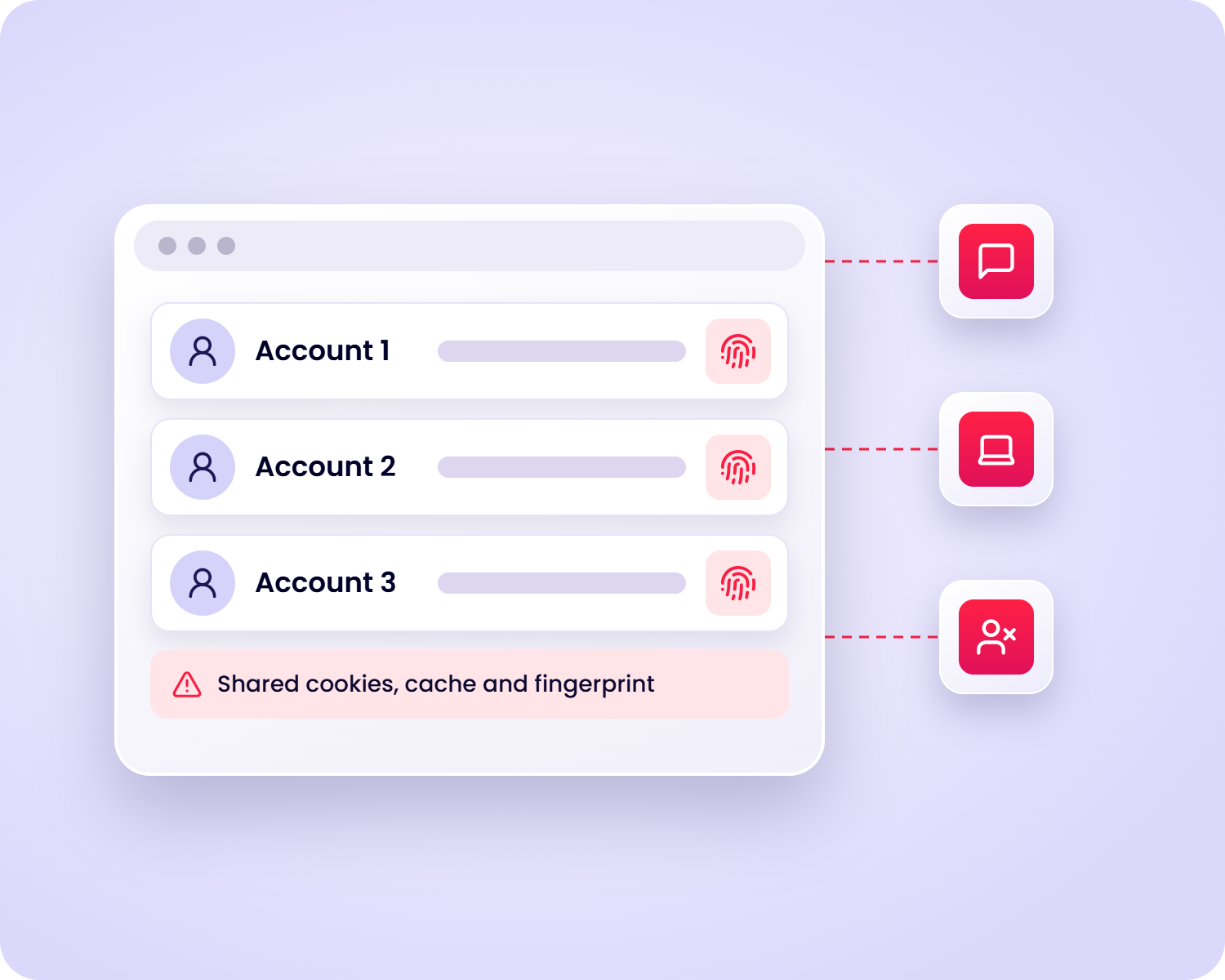
Run ten client accounts from one regular browser and they all share the same cookies, cache, and fingerprint. A problem with one can spread to the rest.
Then there’s everything around the accounts. Login details get pasted into chat so a teammate can help. Session data sits on a laptop that might fail or get lost. A freelancer who left months ago still knows the passwords. Each of these is a gap, and the more accounts you manage, the more gaps you have.
Security Built Into Every Layer of Incogniton
Incogniton protects your accounts at each point where they’re exposed:
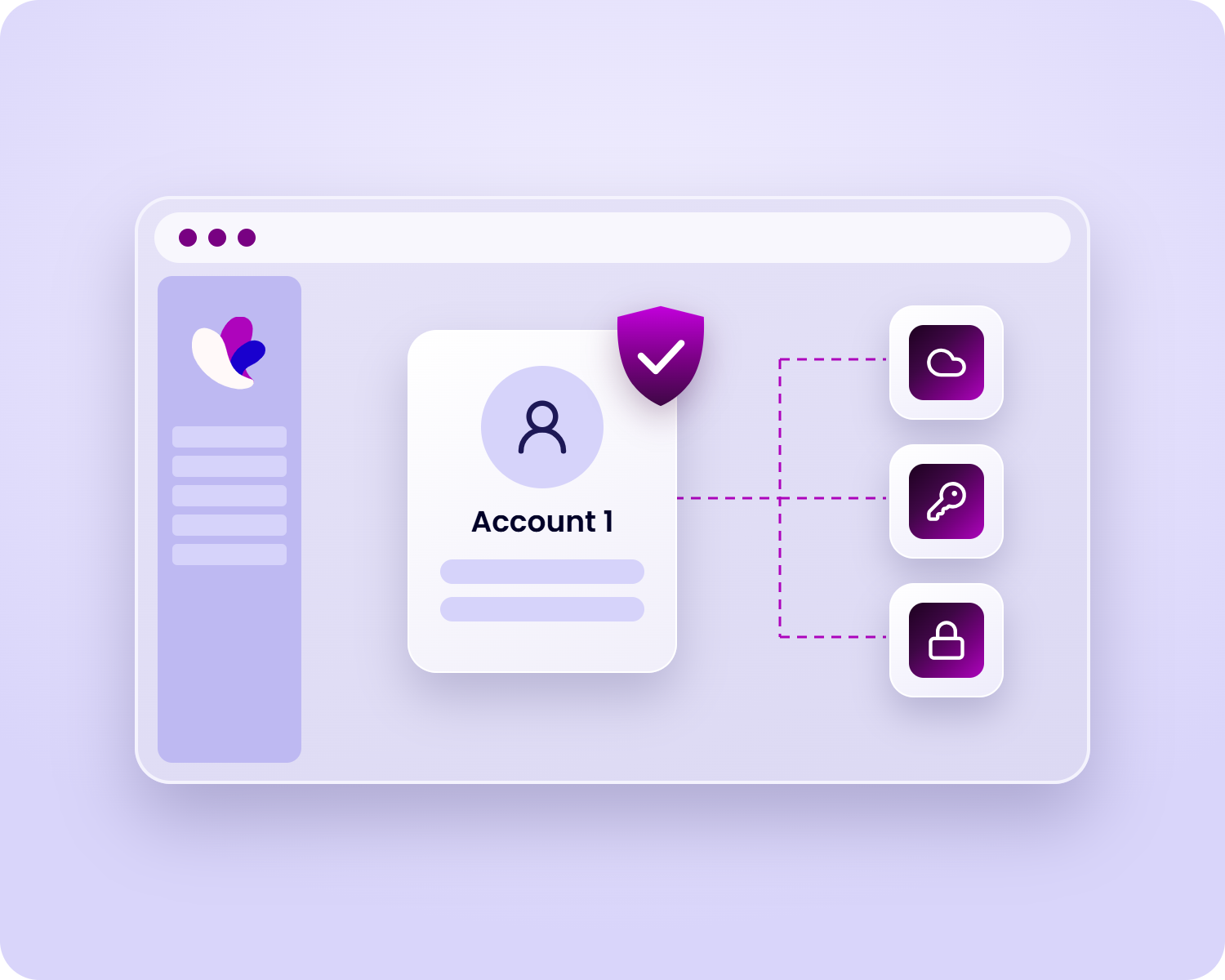
- Isolated profiles: Every profile has its own cookies, cache, storage, and fingerprint, so accounts never share data.
- Storage you choose: Keep profile data on Incogniton’s encrypted cloud servers, or store it locally on your own device.
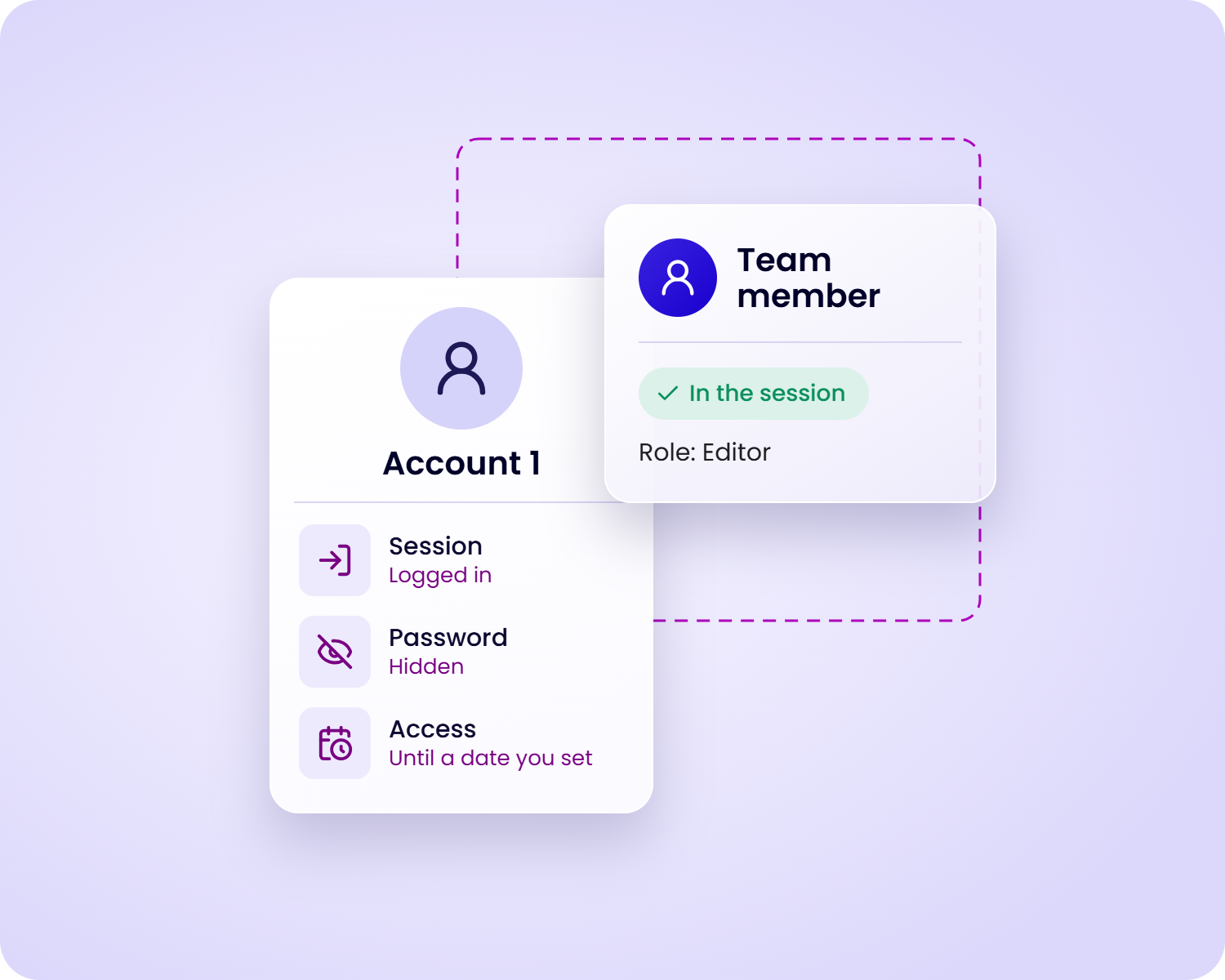
- Sharing without passwords: Give teammates or other Incogniton users access to profiles, and they work inside the session without ever seeing the login details.
- Control over who sees what: Roles, permissions, and expiry dates decide who can open which profiles, and for how long.
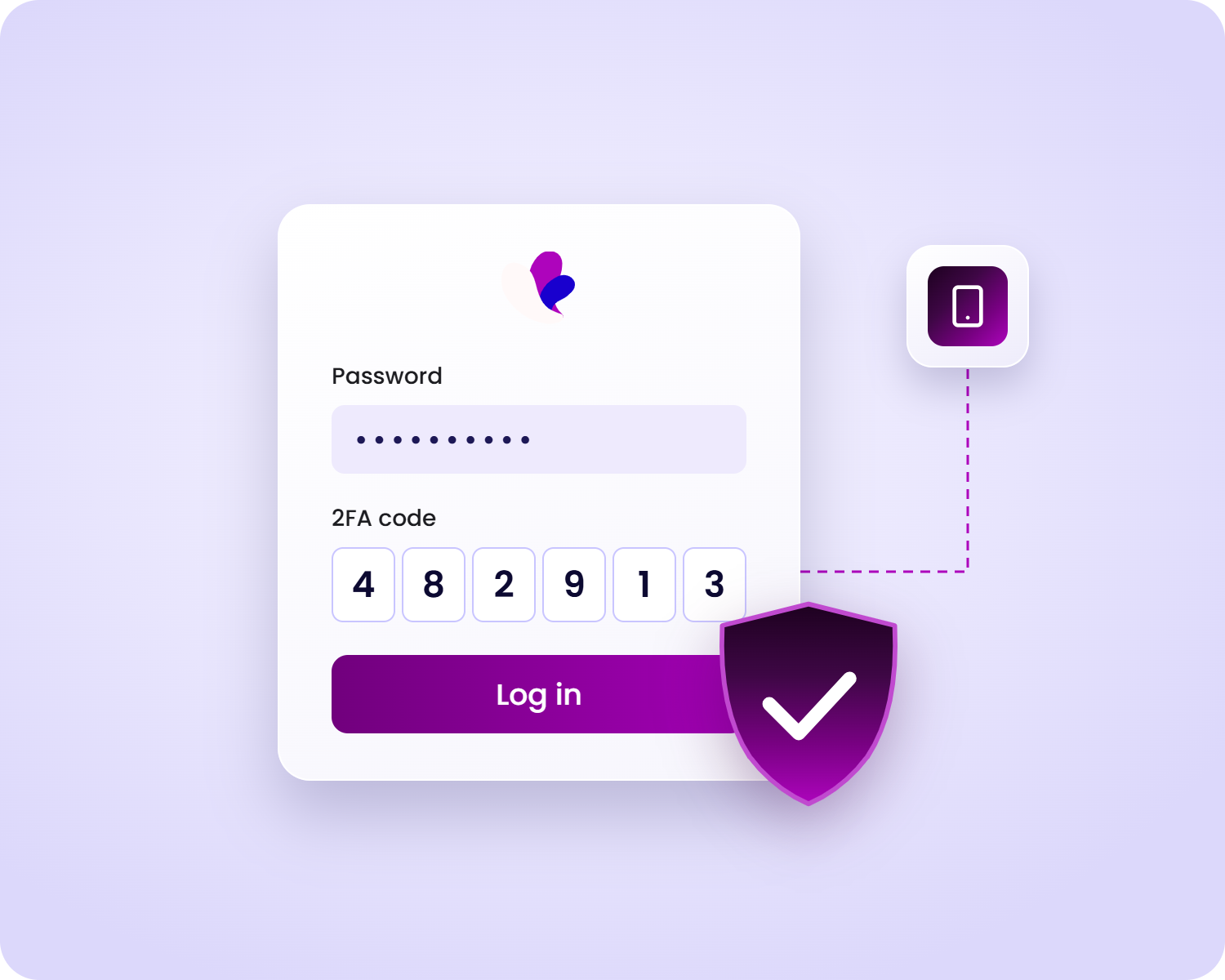
- A locked front door: Add two-factor authentication to your Incogniton account so a stolen password isn’t enough to get in.
How to Set Up Secure Account Management in Incogniton

1. Create a profile for each account
One profile per account, each with its own fingerprint and its own isolated data.

2. Choose where your data lives
Go to Settings > Preferences. Enable cloud saving and pick a server in the United States, Europe, or Asia, or leave it off to keep data on your device.

3. Share access, not passwords
Add team members with roles, or use Settings > Share account to give another Incogniton user access until a date you set.

4. Turn on 2FA for your Incogniton login
Request a token in My Account and connect it to any authenticator app.
Why This Keeps Your Accounts Safer
Problems stay in one profile
Because no two profiles share cookies, storage, or fingerprints, a flagged or compromised account doesn't drag the others down with it.
You decide where your data lives
Use encrypted cloud storage to reach your profiles from any device, or keep everything local for full control over your data.
Access without exposure
Teammates and partners work inside shared sessions without handling passwords. When the work ends, revoke access, and there are no logins to change.
Built with data protection in mind
Incogniton is developed in the Netherlands, with GDPR compliance and data-handling controls built into the platform.
Share Browsing Sessions, Not Passwords
Passing logins around is one of the easiest ways to lose control of an account. Incogniton gives you three safer ways to hand over access:
- Team members: Invite people with their own Incogniton login, assign a role, and share only the profiles they need.
- Account sharing: Let another Incogniton user manage your profiles until an expiry date you choose. Edit the date or revoke access at any time.
- Cookie import and export: Move a logged-in session between profiles or devices without re-entering a password or triggering 2FA again.
Why Choose Incogniton?
- Every account isolated in its own profile
- Encrypted cloud storage, or local storage if you prefer
- Session sharing without passwords
- Roles, expiry dates, and 2FA to control access
- Accounts share cookies and fingerprints
- Session data stuck on one device
- Passwords passed around in chat
- No clean way to remove someone's access
Start your FREE trial today
Sign up now and save up to 10 browser profiles. No credit card required.

Frequently Asked Questions
Is my data encrypted?
Yes. With cloud saving on, your profile data is stored on Incogniton’s encrypted cloud servers.
Can I keep my profile data only on my own computer?
Yes. Leave cloud saving off and your data stays on your device. Profiles will then only be available on that device, and local storage is at your own risk, so back it up.
Where are the cloud servers located?
You can choose a server in the United States, Europe, or Asia. Pick the one closest to you for the best sync speed.
How do I share a profile without sharing the password?
Add the person as a team member and share the profile with them, or use account sharing. They work inside the logged-in session and never see the login details.
Who can use account sharing?
Account sharing is available to paid users with at least 50 profiles. Each account keeps its own profile limit. It can’t be used while 2FA is turned on, so teams that need 2FA should share through team members instead.
Can I protect my Incogniton login with 2FA?
Yes. Two-factor authentication works with any authenticator app, on every plan, including the free one.
