
Proxy pricing can feel confusing at first. One of the earliest decisions most buyers face is whether a provider charges by bandwidth usage or by the number of IPs they assign.
That choice affects both your budget and the way you plan day-to-day usage. This guide compares pay-per-GB and pay-per-IP pricing, explains where each model fits best, and highlights a few practical factors to review before you commit.
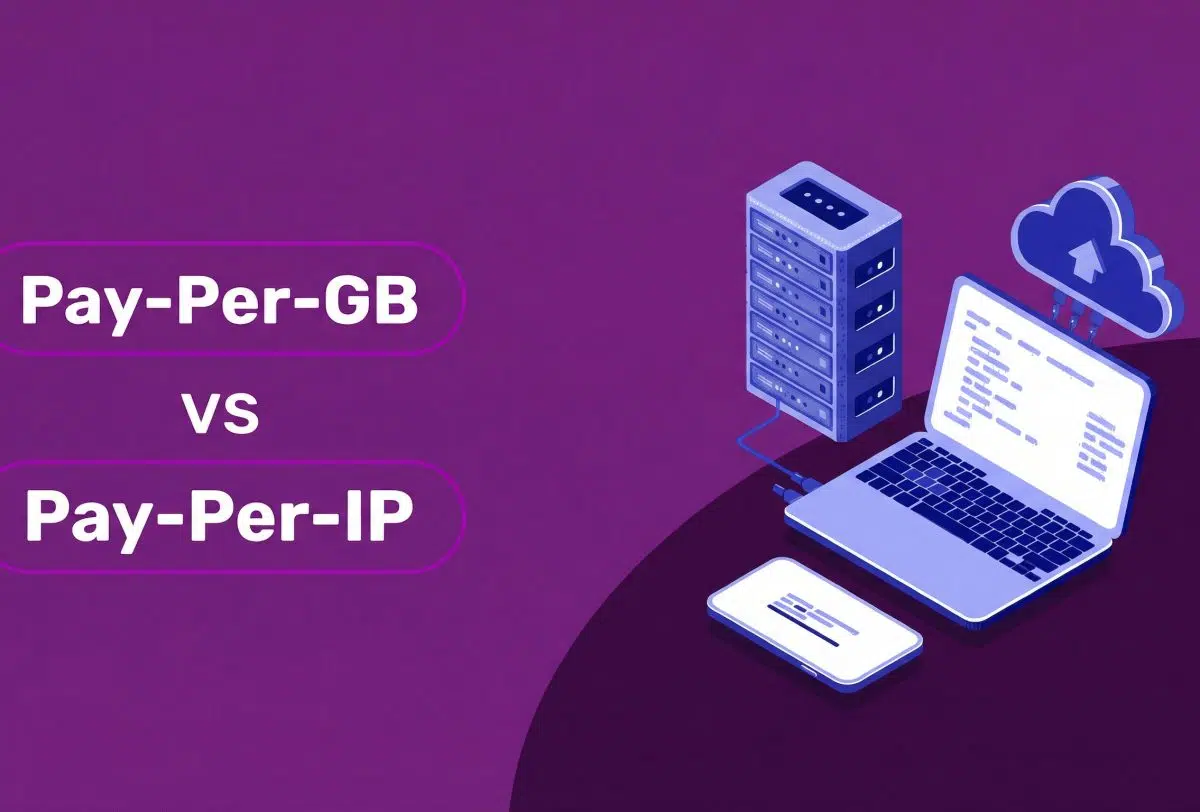
Pay-per-GB vs. Pay-per-IP (Two Popular Pricing Models)
Proxy providers commonly offer two pricing models: pay-per-GB and pay-per-IP. Neither is universally better. The right choice depends on whether your work requires flexible bandwidth, predictable monthly costs, stable sessions, or a combination of all three.
Pay-Per-GB
With pay-per-GB pricing, you are billed based on the amount of traffic you send through the proxy network. Your monthly cost can vary because it depends on how much data your tasks actually transfer.
This model is often a good fit for variable workloads such as research, location-specific QA checks, market monitoring, or compliant data collection projects where bandwidth usage can rise and fall from week to week.
It can also make sense when you do not want to pay for a fixed pool of IPs during quieter periods. If your usage is intermittent, paying for actual traffic can be more efficient than reserving resources you may not fully use.
Pay-Per-IP
In the pay-per-IP model, you pay for access to a set number of IPs or ports, usually on a monthly or yearly basis. This makes budgeting easier because the cost is more predictable than a usage-based plan.
Pay-per-IP is often the better fit when you need stable, repeatable access for ongoing sessions, allowlisted environments, recurring logins, or internal workflows that depend on a consistent address over time.
Which Pricing Model is Right for You?
The best model depends on your use case, expected traffic, and how much cost predictability you need. As a starting point, the decision usually looks like this:
When to opt for pay-per-IP:
- Choose pay-per-IP when you need a stable IP for an extended period, such as account access tied to approved business workflows, internal tools, or services that use IP allowlisting.
- It can also be the more practical choice when you want a fixed monthly budget and expect steady, repeat usage rather than fluctuating traffic.
When to opt for pay-per-GB:
- Pay-per-GB usually makes more sense for bandwidth-heavy or uneven workloads, especially when you need access across multiple locations without maintaining a fixed IP allocation all month.
- It is also useful when you are still testing a workflow and want your spending to scale with actual usage instead of committing upfront to a larger IP pool.
Some teams use both models. For example, a company may keep a small pay-per-IP setup for stable operational access and add pay-per-GB bandwidth for research, QA, or other heavier short-term tasks.
If you plan to use those proxies inside Incogniton, it is also worth comparing how easy each option is to add, test, and manage across browser profiles.
Incogniton's proxy management guide and browser profile setup guide show the practical side of assigning proxies after you choose a pricing model.
Factors to Consider When Choosing a Proxy Solution

Pricing matters, but it should not be the only factor in your decision. Proxy type, location coverage, performance, and provider terms can all change the real value you get from a plan. Here are the main areas to review:
Cost Comparison
Start with your expected usage. Estimate how much traffic you are likely to use, how many IPs you may need, and whether your workload is steady or seasonal. That will give you a more realistic comparison than looking at the headline price alone. For a like-for-like view of residential proxy pricing per GB, compare the minimum commitment, billing rules, and included features before comparing headline rates.
If you want market context, compare official pricing pages from Bright Data, Oxylabs, and IPRoyal. Those pages are useful when reviewing Bright Data residential proxy pricing per GB, Oxylabs residential proxy pricing per GB, or IPRoyal residential proxy pricing per GB, but plan structures and terms can change, so verify the current details directly instead of relying on a copied rate.
It is also worth checking whether the provider offers trials, flexible plan changes, or custom contracts. Pricing, billing terms, and included features can change, so verify the current details directly on the provider's official pricing page before you buy.
Size of IP Pool
A larger network can improve availability, distribution, and regional coverage, especially for workloads that need flexibility across many locations. It can also give you more room to scale without changing providers too quickly.
That said, providers do not always publish network details in the same way. If exact capacity information is not clearly documented, review the official product pages, support materials, and current terms before making assumptions.
Location Coverage
If your work depends on country-level or city-level routing, confirm that the provider supports the regions you actually need. This is especially important for localization QA, compliance reviews, ad verification, and region-specific user experience testing where access is permitted.
Speed and Concurrency
For tasks that involve frequent requests or simultaneous connections, review performance expectations carefully. Not every proxy plan is optimized for the same level of throughput, so check the provider's documentation and support team for current limits and recommendations.
Scalability Needs
Think about where your workload is heading. If you expect gradual, predictable growth, reserving a fixed number of IPs may be convenient. If demand is less predictable, a usage-based plan can give you more flexibility as your traffic changes over time.
Use Case
Your use case should drive the final choice. The same plan can feel expensive or efficient depending on whether you need stable sessions, burst bandwidth, region-specific testing, or a mix of all three.
For social media operations in particular, it is best to follow each platform's approved workflows and account rules. On Meta platforms, for example, teams should use official Page access and task access, along with business tools where applicable, rather than creating extra personal accounts.
Use-Case-Specific Pricing Model Recommendations

Once you match pricing to the actual job, the decision becomes much easier. Here is a practical way to think about a few common use cases:
1. Research, Data Collection, and Monitoring
For data-heavy work, pay-per-GB is often the more natural fit because costs scale with traffic. That can work well for compliant research, market monitoring, and other bandwidth-intensive tasks where usage varies over time.
If consistency matters more than volume, some teams still keep a smaller pay-per-IP allocation alongside their usage-based plan for stable internal workflows.
2. Social Media and Client Operations
For ongoing social media work, pay-per-IP can be useful when you need stable access for recurring sessions or approved client operations. The priority here should be consistency, account security, and adherence to each platform's rules.
If you manage Facebook Pages or related business assets, use official Meta access controls such as Facebook access and task access, along with Meta business tools, instead of setting up duplicate personal accounts for different team members or clients.
3. Affiliate Marketing and Ad Verification
Affiliate and advertising teams often need a mix of stable sessions and region-specific checks. Depending on the workload, that can make either model viable: pay-per-IP for repeat operational access, or pay-per-GB for broader testing, QA, and verification across multiple locations.
4. Location-Specific Testing
If you need to check how content, pricing, or UX appears in different regions, choose a provider with the geographic coverage you need and confirm that your intended use is permitted. The pricing model then comes down to frequency: pay-per-GB for occasional or traffic-heavy checks, and pay-per-IP for long-running, repeat access from the same region.
These recommendations are general starting points, not hard rules. Your final decision should reflect your volume, compliance requirements, workflow, and the provider terms available at the time you sign up.
Maximizing Value: Tips for Cost-Effective Proxy Usage
Keeping costs under control is easier when you align the plan with the actual workload. These practices can help:
1. Optimize Data Transfer
If you use pay-per-GB pricing, reduce unnecessary traffic wherever possible. Request only the data you need, use caching when appropriate, and avoid re-running large jobs when a smaller validation pass will do.
2. Monitor and Analyze Usage
Track usage over time so you can see whether your workload is steady enough for pay-per-IP or variable enough for pay-per-GB. Reviewing traffic patterns, connection needs, and support issues will make plan changes easier to justify.
3. Choose the Right Proxy Plan
A smaller fixed plan may be enough for short-term or tightly scoped work, while larger or more flexible plans can make sense for long-running projects. The key is to match the contract to your real usage pattern instead of buying for a hypothetical peak you may never reach.
FAQ
When should I choose pay-per-GB?
Choose pay-per-GB when traffic volume is likely to fluctuate or when your work is more bandwidth-heavy than session-heavy. It is often a practical fit for research, monitoring, QA, and similar tasks where usage is uneven.
When is pay-per-IP the better fit?
Pay-per-IP is usually the better fit when you need predictable monthly costs and stable access from the same address over time, such as allowlisted tools or recurring operational workflows.
Do proxy type and pricing model always match?
No. Residential, mobile, ISP, and datacenter proxies are often sold in different ways, and some providers offer more than one billing model for the same category. Always check the current plan structure on the official provider page.
How should teams handle social media access?
Use the platform's approved collaboration tools and access controls. For example, Meta provides Facebook access and task access for Pages, which is a better fit for team operations than creating duplicate personal accounts.
Conclusion
There is no universal winner between pay-per-IP and pay-per-GB. One favors predictability, the other favors flexibility, and many teams end up using both. The best choice is the one that matches your workload, your compliance needs, and the provider terms you have verified for yourself.
Before choosing a plan, review the provider's latest pricing, coverage, supported protocols, and terms on its official site. A quick verification step now can prevent an expensive mismatch later.