
Creating a new online account is easy. Building enough history for a platform to trust it is harder.
New or dormant accounts can face restrictions when they suddenly perform large numbers of actions, switch between unfamiliar devices or locations, or show behaviour that resembles automation. This can affect social media accounts, advertising accounts, e-commerce profiles, and other online platforms.
Account warming is one way to reduce these risks. It involves gradually building activity and history rather than immediately operating a new account at full capacity.
For people managing multiple accounts, however, manually warming every profile can become repetitive and difficult to scale. Automation can help, provided it is designed around consistency, gradual activity, and the rules of the platform being used.
This guide explains what account warming is, why it matters, how platforms identify unusual behaviour, and how to build a more structured account warming process with tools such as Incogniton.
What Is Account Warming?
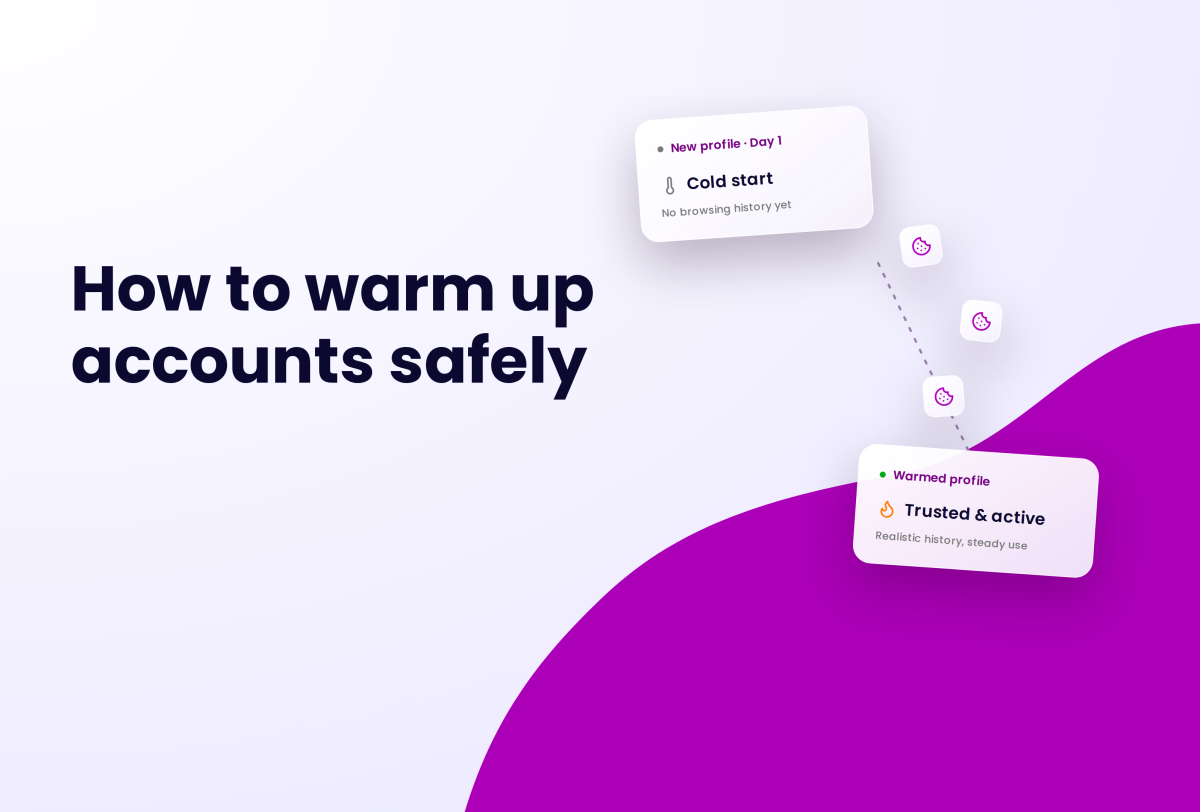
Account warming is the gradual process of building activity and history on a new or dormant account before moving it to normal levels of use. It can involve browsing, completing a profile, engaging with relevant content, and progressively introducing normal account activities.
The rationale for this is simple. A new account has little history so sudden bursts of activity can look unusual compared with an established account that has accumulated months of normal browsing and engagement.
A basic warming process might begin with logging in, browsing relevant content, completing the profile, and spending some time using the platform. It also involves getting cookies because they store information about previous interactions with websites, such as sessions, preferences, and other browsing data.
Later, the account can move into light engagement before gradually reaching its normal level of activity.
Why Does Account Warming Matter?
Platforms use a range of signals to identify spam, abuse, fake accounts, and automated activity. A new account with little history that immediately performs high-volume actions can therefore attract additional scrutiny.
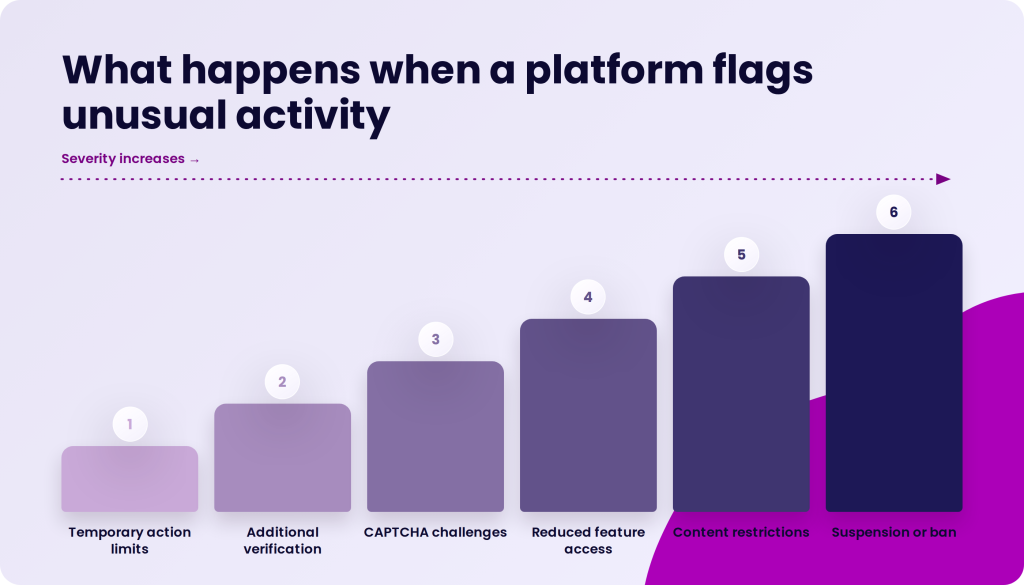
Depending on the platform and the circumstances, unusual activity may result in:
- Temporary action limits
- Additional verification requests
- CAPTCHA challenges
- Reduced access to certain features
- Content or visibility restrictions
- Account suspension or termination
The problem becomes more complicated when multiple accounts are managed from the same environment. Shared browser characteristics, inconsistent IP addresses, or mixed cookies and sessions can make it easier for platforms to associate accounts.
Account warming is not a guarantee against restrictions or bans. It is simply a way to avoid unnecessary spikes in activity and establish a more consistent usage pattern.
Manual vs. Automated Account Warming
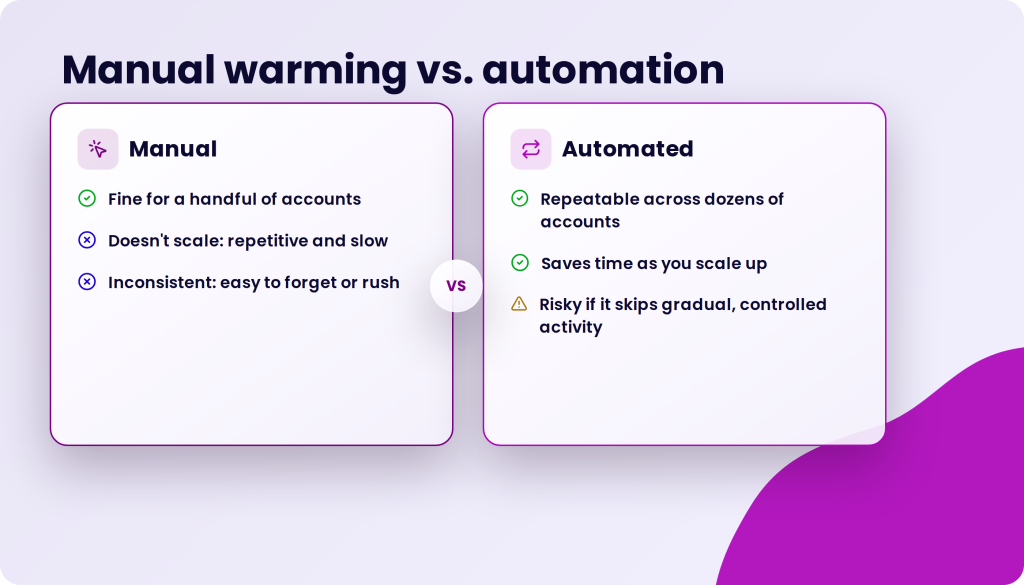
Manual warming is the simplest approach. Someone logs into each account, browses content, interacts with the platform, and gradually increases activity. For a small number of accounts, this can be manageable.
The problem appears at scale.
If a team manages dozens of accounts, repeating the same basic tasks every day consumes considerable time. It can also introduce inconsistency because people forget tasks, change their routines, or rush through sessions.
Automation can make the process more repeatable. But automation does not automatically make warming safer.
A simple script that performs the same actions at the same intervals across every account can itself create obvious patterns. The objective should therefore not be to automate as much activity as possible. It should be to automate the right parts of a controlled, gradual process.
How Incogniton Cookie Collector Helps With Account Warming
Incogniton is an anti-detect browser designed for multi-account management. It gives each profile a unique digital fingerprint, making it harder for platforms to link your accounts. But even with a clean fingerprint, a new profile still lacks the cookie history that real users accumulate over months or years.
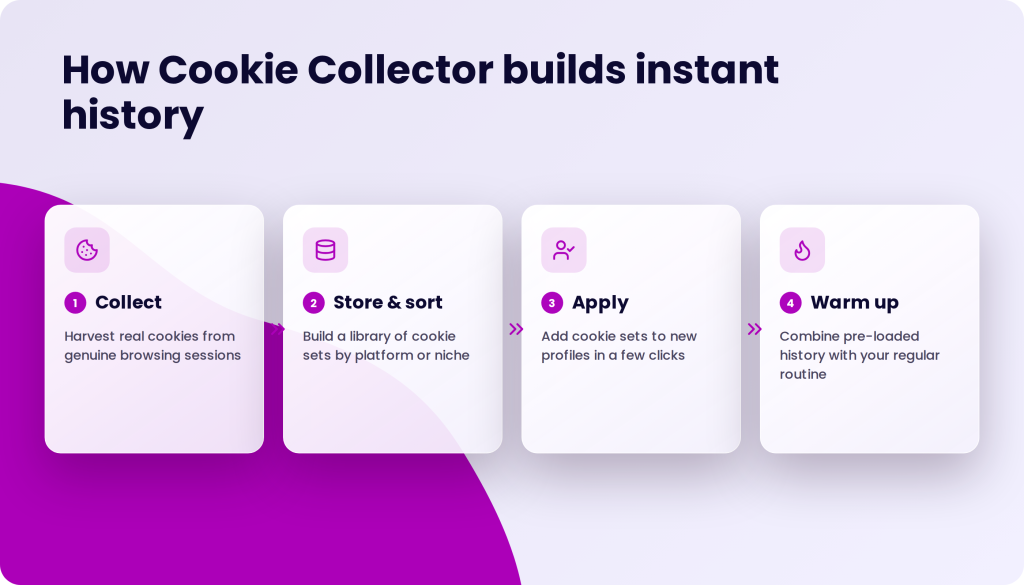
Incogniton’s Cookie Collector solves this by letting you harvest real cookies from genuine browsing sessions and apply them to your profiles in bulk.
Here’s how it works in practice:
- Collect real cookies from websites you want your profiles to appear familiar with. These cookies come from actual browsing sessions, so they represent genuine user activity.
- Store and organize those cookies in Incogniton. You can build a library of cookie sets for different platforms, niches, or account types.
- Apply cookies to new profiles with a few clicks. Instead of starting from zero, your profile now looks like it has a history of visiting relevant sites, engaging with content, and behaving like a normal user.
- Warm up accounts faster by combining this pre-loaded cookie history with your regular warming routine. The account doesn’t look suspiciously empty anymore, so you can scale activity more quickly without tripping security systems.
Because this happens inside an anti-detect browser, the cookies are isolated per profile. You don’t have to worry about cross-contamination between accounts, mixed sessions, or leaking your real identity. Each profile maintains its own clean, separate environment with its own realistic cookie footprint.
Why Cookie Collector Beats Manual Cookie Import
You might be thinking: “Can’t I just export cookies from Chrome and import them manually?” Technically, yes. But there are a few big differences.
The first one is that manually importing cookies into dozens or hundreds of profiles is tedious. Cookie Collector lets you apply cookie sets across multiple profiles at once.
Second, with manual imports, it’s easy to make mistakes, miss profiles, or accidentally mix cookies from different accounts. Incogniton keeps everything organized and profile-specific.
Third, instead of spending hours copying and pasting cookie data, you can warm up entire batches of accounts in a fraction of the time.
Finally, because Cookie Collector is built into Incogniton, it works seamlessly with your existing profile management, proxy settings, and fingerprint controls.
Account Warming Best Practices
Whether warming accounts manually or through automation, a few principles are worth keeping in place.
Start slowly and increase activity progressively
Do not move a new or dormant account directly from little or no activity to its full operating volume. Begin with the activities that make sense for the account and gradually increase usage. The appropriate pace will depend on the platform, account history, and type of activity.
Keep each account in a consistent environment
Once an account has been assigned a browser profile, avoid repeatedly moving it between unrelated profiles or browsers.
Keeping cookies, browsing data, and other profile information together makes account management more predictable and reduces unnecessary changes to the account's environment.
Follow platform rules
Understand the platform's rules and normal usage limits before automating activity. Account warming should not be used to bypass restrictions, evade enforcement, or generate prohibited activity
Do not assume warming makes an account immune to bans. Platforms can restrict accounts for many reasons, including policy violations, suspicious activity, compromised credentials, or other security concerns.
Conclusion
Account warming isn’t optional if you want your accounts to last, especially if you are managing multiple accounts online. Instead of starting from zero and hoping for the best, you’re starting with a realistic foundation and building on it strategically. That means fewer flagged accounts, faster warm-up times, and more time spent growing your business instead of babysitting fragile profiles.
But it also shouldn’t eat up all your time or limit your ability to scale. Tools like Incogniton’s Cookie Collector increase the efficiency of the process and help you even do it better.