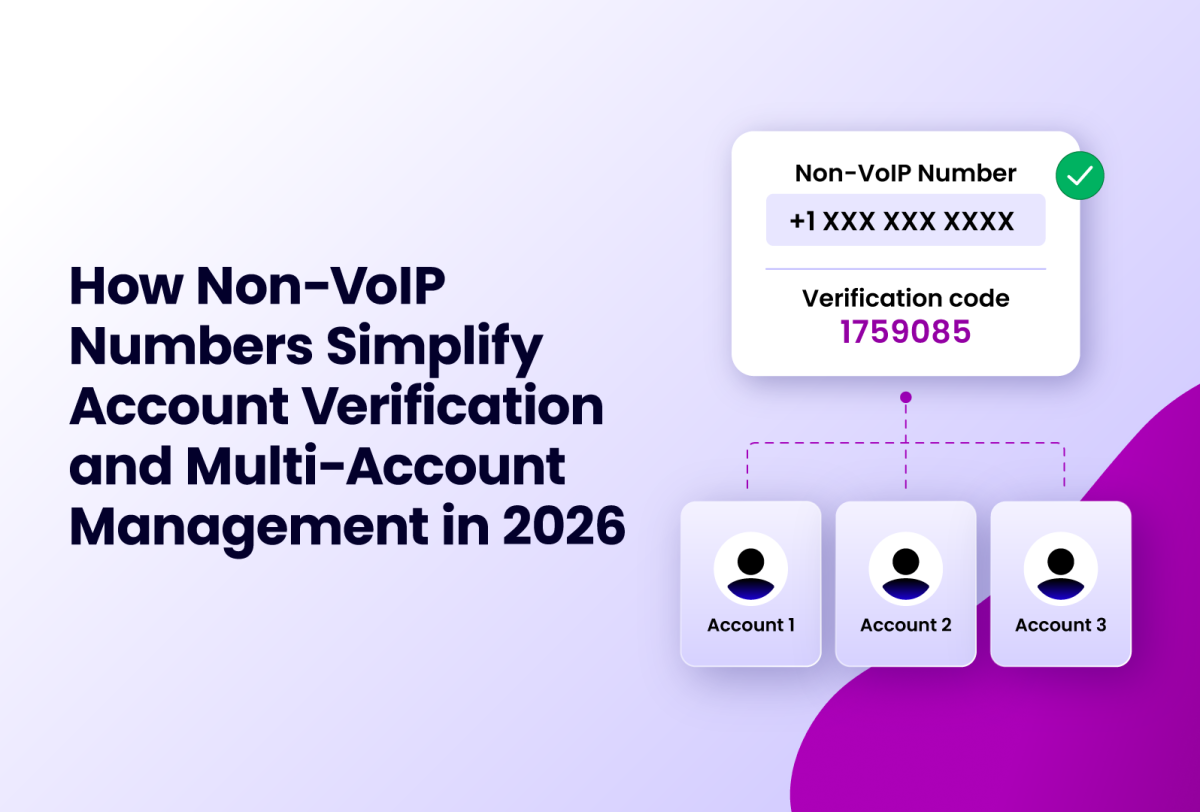

Phone verification prompts, CAPTCHA tests, suspicious-activity flags, and outright bans. Anyone who runs more than one account on a major platform hits the same wall, and for years the workaround was simple: grab a cheap virtual number, paste in the code, and move on.
That workaround mostly stopped working. The free and virtual numbers that sailed through verification a few years ago now get rejected before the code is even sent. The problem is not the number itself. It is what type of number it is, and understanding that difference is what separates a smooth multi-account setup from an afternoon lost to failed verifications.
Why Virtual (VoIP) Numbers Stopped Working
Most virtual numbers are VoIP, which means they route calls and texts over the internet instead of a real mobile carrier network. That was fine when platforms did not look closely. In 2026 they look very closely.
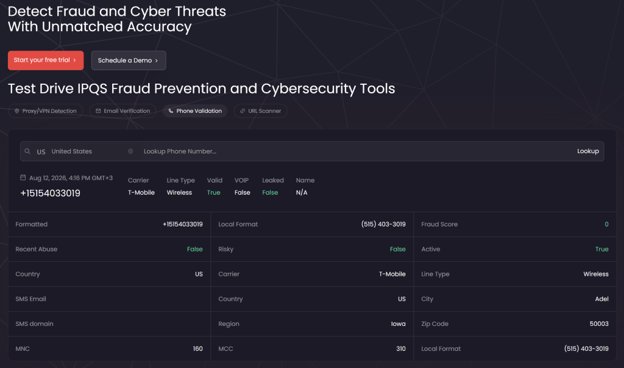
Before sending a verification code, platforms now run a carrier lookup on the number: an instant check of whether it belongs to a licensed mobile carrier or a VoIP service. This is the same class of check powered by tools like Twilio Lookup, and it happens in real time. If the lookup returns VoIP, many platforms silently drop the SMS. No code, no error message, no account. You are left staring at a verification screen wondering what broke.
The strict platforms, including WhatsApp, Google, Telegram, and financial services, reject VoIP numbers almost universally, and the filtering keeps tightening across social and e-commerce sites too. The takeaway is straightforward: if verification matters, the number has to read as a real carrier line.
What Are Non-VoIP Numbers?
A non-VoIP number is issued by a licensed mobile carrier and runs on a genuine cellular network, the same class of number as the SIM in a physical phone. When a platform runs its carrier lookup, a non-VoIP number returns as a legitimate mobile line, so the verification code goes through the way it is supposed to.
Non-VoIP numbers are the reliable choice for:
- Phone verification for new accounts: Whether it is social media, marketplaces, or financial platforms, a carrier-backed number passes the check without exposing a personal number.
- Multi-account management: Give each account its own real number so platforms treat them as independent, instead of flagging them as one operator running many profiles.
- Privacy and security: Separating account activity from a personal phone number keeps that number out of platform databases and off breach lists.
- International access: Numbers in different country codes let you register for region-locked services and verify accounts as a local user would.
How Non-VoIP Numbers Empower Businesses
Individual users benefit, but the bigger gains are on the business side, where multi-account operations are a daily requirement rather than an occasional need.
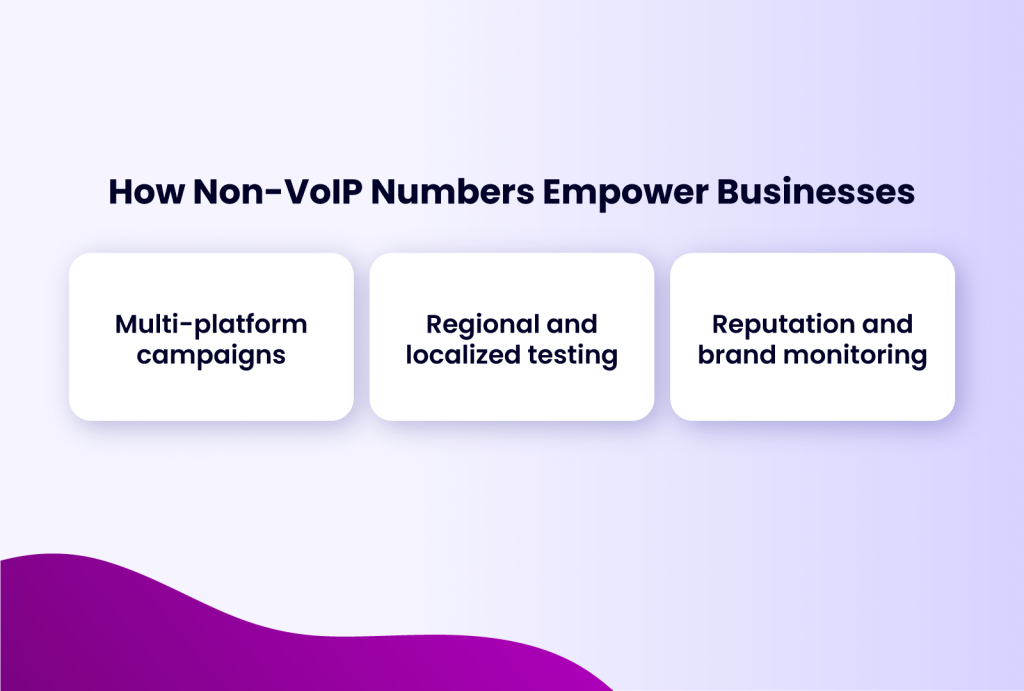
Multi-platform campaigns
Agencies and online sellers run ads and brand presences across many accounts. Carrier-backed numbers let them open and hold the accounts those campaigns depend on without tripping the platform limits that a shared or VoIP number would.
Regional and localized testing
Teams testing geo-specific pricing, availability, or content need accounts that verify as local users in each market. Non-VoIP numbers in the right country codes make that possible with accurate, region-matched identities.
Reputation and brand monitoring
Businesses maintain dedicated accounts to track mentions, monitor competitors, and manage separate professional presences, all without linking that activity back to a single personal identity.
VoidMob: Non-VoIP Numbers Built for Multi-Account Operations
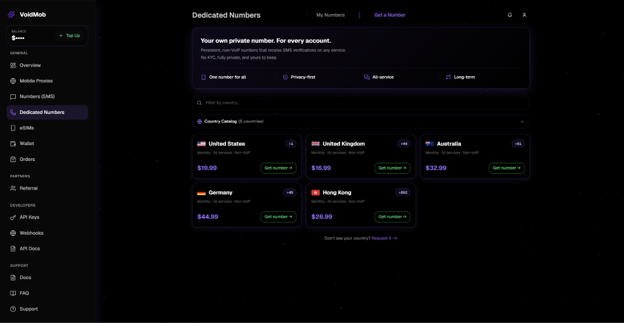
For operators who need this at scale, VoidMob is a top-tier infrastructure provider for multi-account work, supplying carrier-grade non-VoIP numbers and the mobile network layer underneath them. It splits verification into the two things multi-account operators actually need:
- Short-term OTP numbers: one-time numbers for a single, quick verification at signup. These are built for high-volume account creation, where you need a fresh carrier number, one code, and nothing to manage afterward.
- Dedicated long-term numbers: a number you keep, for accounts that need ongoing two-factor codes and periodic re-verification. Because the number stays yours, the account never gets locked out by a recycled or reassigned line. This pairs with global mobile IPs and eSIM data for operations that span multiple countries.
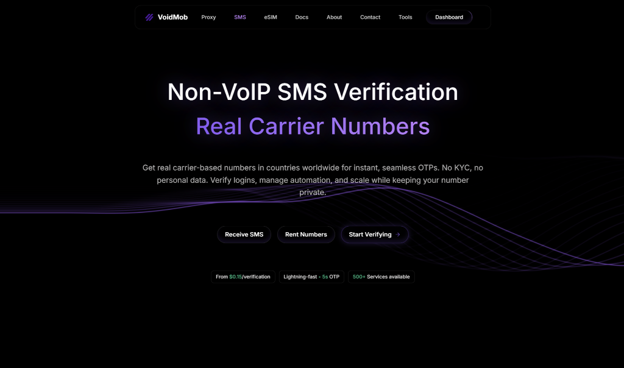
You can see both options on the VoidMob SMS verification page. Numbers are real carrier-issued non-VoIP lines, delivery is near instant, the service takes crypto, and everything is reachable through an API for teams that automate their pipelines.
Pairing Non-VoIP Numbers With Incogniton
A real number gets an account created. Keeping many accounts alive and unlinked is a second problem, and this is where the number pairs with an anti-detect browser.
Incogniton creates isolated browsing environments, each with its own unique fingerprint, so a website cannot tell that one machine is running dozens of profiles. Give each Incogniton profile its own non-VoIP number and the accounts become genuinely independent: separate identity, separate verification, separate history.
The last piece is the network. Two profiles exiting through the same IP are still linkable no matter how clean their fingerprints are, so each profile also needs its own address. VoidMob mobile proxies give every profile a clean 4G or 5G carrier IP, which is the hardest type for platforms to flag because carrier-grade NAT means real subscribers share the same ranges. An Incogniton profile, a VoidMob non-VoIP number, and a VoidMob mobile IP together produce an account that reads as an ordinary person from the very first session. For managing them side by side, Incogniton’s multi-accounting tools keep every profile organized in one place.
Automating It: MCP for 2026 Workflows
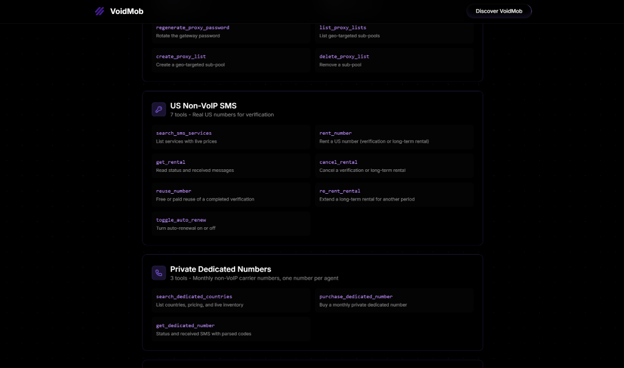
By 2026, serious multi-account operations are rarely manual. The standard way to wire infrastructure into automated and AI-driven workflows is the Model Context Protocol, and VoidMob runs an open-source MCP server that gives AI agents direct access to mobile proxies, non-VoIP SMS verification, and eSIM data through a set of native tools. An automation script or an AI agent can rent a number, read the verification code, and rotate a proxy IP as ordinary tool calls, with no custom integration code in between.
Adding it takes one command in Claude Code:
claude mcp add voidmob -- env VOIDMOB_API_KEY=vmk_live_... npx -y @voidmob/mcp
For Claude Desktop, Cursor, or any other MCP client, the config is a small JSON block:
{
"mcpServers": {
"voidmob": {
"command": "npx",
"args": ["-y", "@voidmob/mcp"],
"env": { "VOIDMOB_API_KEY": "vmk_live_..." }
}
}
}
Once connected, the agent auto-discovers the full tool set and can provision numbers and proxies on demand. A typical verification flow is a handful of tool calls: buy a mobile proxy, rent a number, submit the signup form through the proxy, then read the code back. This is what turns multi-account verification from a manual chore into part of an automated pipeline.
Conclusion
Phone verification is designed to slow down anyone creating more than one account, and the free VoIP numbers that used to get around it now fail on contact. Non-VoIP numbers solve the verification step properly, because they pass the carrier lookup that platforms now run on every signup.
Paired with Incogniton for profile isolation and mobile proxies for clean per-account IPs, carrier-backed numbers become the foundation of a multi-account setup that actually holds. VoidMob supplies the non-VoIP numbers and the mobile network layer, Incogniton supplies the isolated browser, and together they give operators the tools to run accounts at scale without exposing personal details or getting flagged.