
Keeping your NFT minting wallets separate and unlinked isn't a power-user trick; it's the baseline for anyone serious about Web3. Yet most collectors still operate with a single wallet plugged into everything: mints, dApps, Discord verifications, and marketplace bids. One bad smart contract, one malicious approval, and everything accumulated is gone.
There's also the privacy problem: the blockchain is fully public. Your wallet address exposes every asset you hold and every transaction you've ever made permanently. Use your main wallet to mint an unverified project, and you've just tied that activity to your primary identity forever.
Wallet separation solves both problems. A dedicated minting wallet contains the blast radius of any security incident. Separate identities keep your on-chain activity private and unlinkable.
This guide covers exactly how to do it properly — not just generating a new seed phrase, but building a setup that holds up at every layer and ensures your assets and activities remain secure and private.
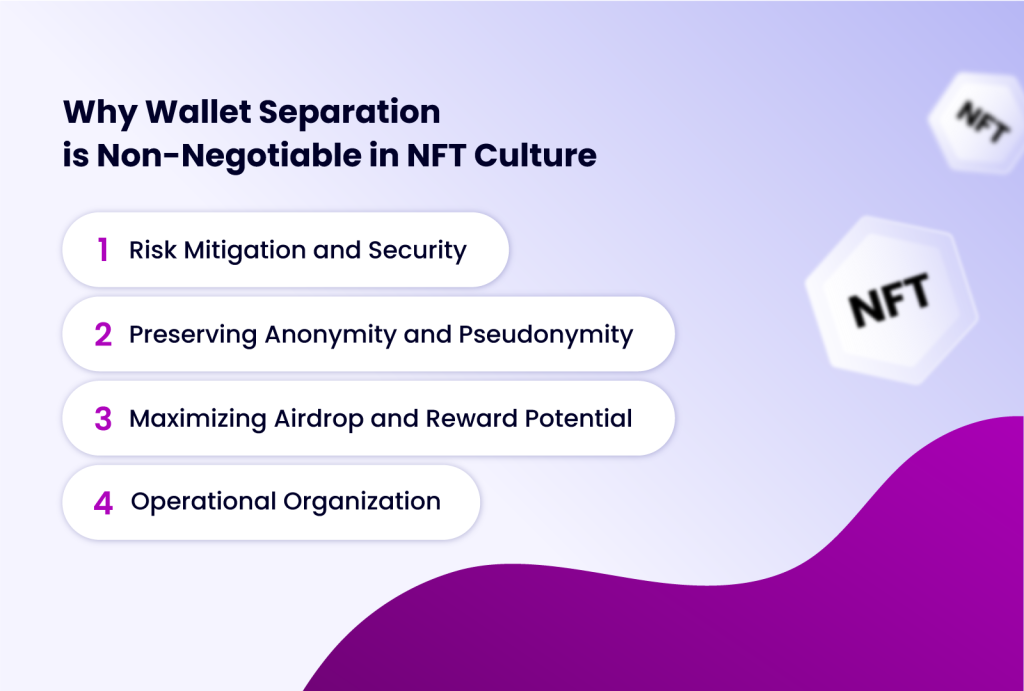
Why Wallet Separation is Non-Negotiable in NFT Culture
The allure of a single, convenient wallet is strong, but the risks are far greater. Here’s why compartmentalising your NFT activities is a cornerstone of smart Web3 participation.
1. Risk Mitigation and Security
Your primary wallet, likely holding your most valuable blue-chip NFTs and crypto, should be treated like a bank vault. Using it to mint a new, unverified NFT project is akin to using your primary bank card on a sketchy website. Smart contracts can be malicious, and connecting your wallet can lead to drainer attacks, where all assets are stolen.
A dedicated minting wallet acts as a firewall. If a mint goes wrong, you only risk the gas fees and mint cost in that isolated wallet, protecting your main holdings.
2. Preserving Anonymity and Pseudonymity
The blockchain is a public ledger. Anyone can see all the assets held by a wallet address and trace its entire transaction history. If you mint a controversial piece, participate in a competitive allowlist, or simply want to keep your collecting habits private, using your main wallet links that activity directly to your public identity. Separate wallets allow you to cultivate different personas or keep certain activities completely detached from your primary "face" in the ecosystem.
3. Maximizing Airdrop and Reward Potential
As covered in our previous blog post on Crypto Airdrop Hunting, many Web3 projects reward early, active users with token airdrops. These projects often use sophisticated sybil detection to filter out users who appear to be farming rewards from multiple wallets.
If your wallets are linked by on-chain behaviour, IP address, or browser fingerprint, you risk being disqualified. Truly separate wallets, each with unique behavioural patterns, significantly increase your chances of qualifying for rewards across different projects.
4. Operational Organization
For creators, traders, or collectors managing multiple projects or strategies, separation is key to sanity. A wallet dedicated to minting from a specific artist, another for participating in a particular gaming ecosystem, and another for high-value holdings makes tracking performance, costs, and taxes infinitely more manageable.
How Incogniton Helps You Solve These Problems
Most DIY approaches to wallet separation fail, not because of bad intentions, but because they only address one layer of the problem.
- Using separate Chrome profiles handles cookies but shares a fingerprint.
- Using incognito mode clears history but changes nothing about how your browser identifies itself.
- Using a VPN masks your IP but leaves your fingerprint completely intact. Each of these feels like a solution and isn't, and sophisticated platforms know the difference.
Incogniton is built specifically for this gap. It's an anti-detect browser, which means its entire architecture is designed around one core principle: making each browser profile appear to be a completely independent machine, operated by a completely independent person. Not hidden. Not masked. Genuinely distinct. Here's how that plays out across the specific problems NFT participants actually face:
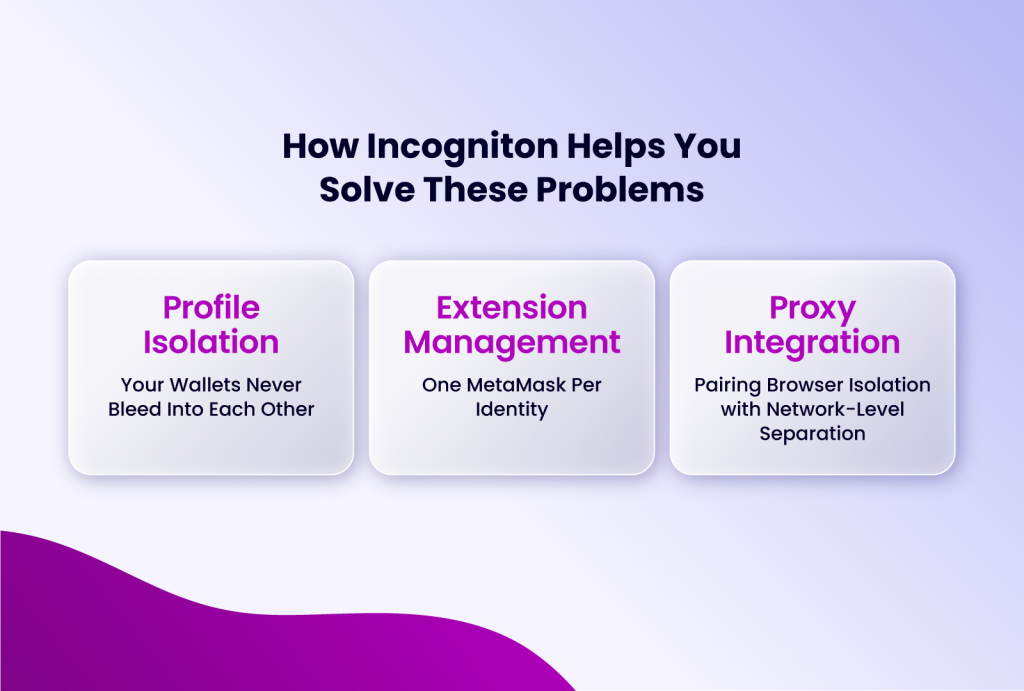
Profile Isolation: Your Wallets Never Bleed Into Each Other
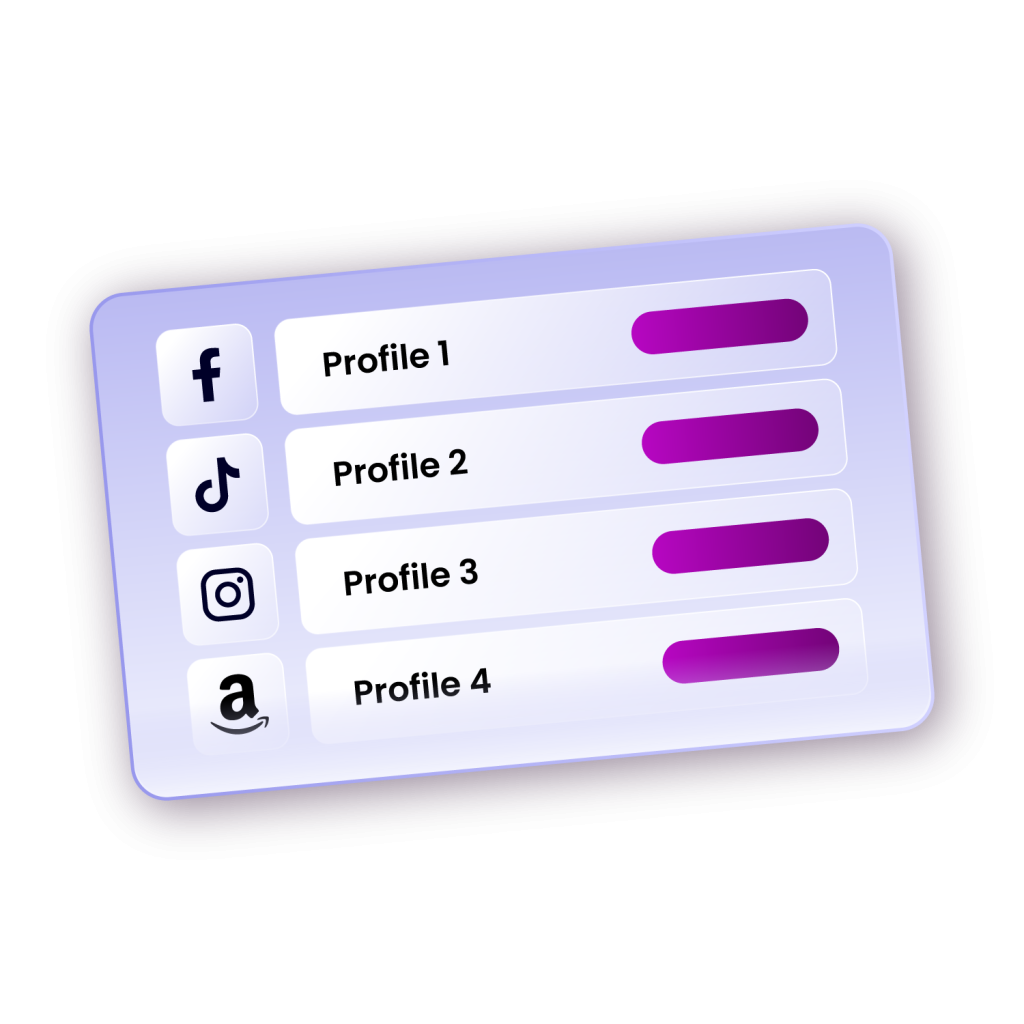
In Incogniton, every browser profile is a sealed environment. The cookies, cache, localStorage, session data, and fingerprint generated inside your "Vault" profile have zero interaction with your "Minting Experiment" profile or any other. There is no shared state between them at any level.
This matters more than it sounds. Many platforms don't just check your wallet address — they check behavioural signals accumulated over time: which sites you've visited, what approvals you've granted, how long you've been active.
When those signals are siloed per profile, each wallet identity builds its own independent history. A compromised minting profile can't leak behavioral data backwards into your vault. An airdrop wallet flagged on one platform carries no fingerprint connection to your other wallets on another.
Extension Management: One MetaMask Per Identity
Each Incogniton profile supports its own independently installed browser extensions. That means each of your profiles gets its own MetaMask installation, seeded with its own wallet, completely separate from the MetaMask instance running in your vault profile. They don't share state, they don't share history, and they don't know each other exist.
You can install the MetaMask extension separately in each profile. As we outlined in our guide on managing a MetaMask browser extension in Incogniton, this process is seamless. Each profile gets its own instance of MetaMask, configured with its specific wallet.
This is a practical necessity that often trips people up. MetaMask itself stores wallet data locally in the browser, which means if two wallets share a browser environment, that environment becomes a point of linkage. By installing MetaMask fresh inside each Incogniton profile, you eliminate that link entirely. Each profile is its own wallet environment from the ground up, not just a different account inside a shared one.
Proxy Integration: Pairing Browser Isolation with Network-Level Separation
It's worth noting that browser profile isolation handles the fingerprint layer, but for the most robust separation, each profile should also operate through a distinct IP address. This typically means assigning a dedicated residential or datacenter proxy to your Incogniton profiles. When the fingerprint, the cookies, and the IP address are all unique per wallet identity, the profiles are undetectable as belonging to the same operator — even by platforms running aggressive correlation checks.
Incogniton supports proxy assignment at the profile level, so this pairing is straightforward to set up. The combination of a unique fingerprint and a unique network exit point closes essentially all of the automated linkage vectors that platforms use to cluster wallet identities.
Conclusion
In the transparent yet perilous landscape of Web3, privacy and security are active pursuits, not default states. Keeping your NFT minting wallets separate and unlinked is a fundamental discipline for protecting your assets, maximizing opportunities, and maintaining control over your digital identity. This goes far beyond generating a new seed phrase. It requires a holistic strategy that addresses the wallet, the browser fingerprint, and the network layer.
By leveraging purpose-built tools like the Incogniton anti-detect browser to manage isolated environments and pairing them with disciplined operational security habits, you transform from a vulnerable single-point user into a resilient, multi-faceted participant in the digital asset revolution. Your NFTs are valuable; the privacy and security of the wallets that hold them should be treated with the same level of care and sophistication.