

You've probably heard the terms "browser fingerprint" and "device fingerprint" thrown around whenever people discuss the new and increasingly opaque ways tracking on the internet has evolved. They're often used interchangeably, which makes it easy to assume they mean the same thing. They don't.
Both fall under the broader umbrella of digital fingerprinting: a set of techniques designed to identify you without relying on traditional trackers like cookies. Same goal, different methods, different layers of your digital life. These methods have been pretty effective and come with less stress and issues for those who deploy them.
This article is for you, on the other side of that equation. We’ll demystify these two critical concepts - break down what each fingerprint is, how they are collected, their primary use cases, and, most importantly, what you can do to regain control.
Before diving into the differences, let's establish clear, foundational definitions.
What is a Browser Fingerprint?
A browser fingerprint is a unique identifier created by collecting a wide array of characteristics specific to your web browser and its configuration. It's a digital snapshot of your software environment at the moment you visit a website.
Think of it this way: your browser is like a car you drive on to the internet. The browser fingerprint describes the car's model, paint color, installed accessories, license plate frame, and even the slight wear on its tires. It doesn't necessarily identify you, the driver, but it creates a highly recognizable profile of the vehicle you're using.
Key Data Points in a Browser Fingerprint:
- User-Agent String: Identifies your browser type (Chrome, Firefox), version, and operating system.
- HTTP Headers: Information like accepted languages and content types.
- Screen Resolution & Color Depth: The exact pixel dimensions of your display.
- Installed Fonts & Plugins: The list of typefaces and browser extensions.
- Time Zone & Language Settings.
- Canvas & WebGL Fingerprints: How your browser renders graphics and 3D elements, which vary slightly between hardware and software combinations.
- Audio Fingerprint: How your device processes sound signals.
READ MORE: What Canvas Fingerprinting Is and How It Works?
As we discussed in our guide to Browser Fingerprinting, these attributes are often high-entropy—meaning they are specific and rare. A website only needs about 33 unique bits of information to distinguish you from every other person on Earth. Critically, this fingerprint remains largely unchanged even when you use incognito or private browsing modes, as those only clear local data like cookies and history.
What is a Device Fingerprint?
A device fingerprint is a broader, more hardware-centric identifier. It aims to uniquely identify the physical device itself—your smartphone, laptop, or tablet—by gathering information about its core hardware and firmware.
Extending our car analogy, the device fingerprint would describe the engine serial number, the Vehicle Identification Number (VIN), the specific model of the transmission, and the embedded computer system. It's a deeper, more persistent identifier of the machine.
Key Data Points in a Device Fingerprint:
- Hardware Conformation: CPU model, number of cores, architecture (32-bit vs. 64-bit).
- Graphics Processing Unit (GPU): Vendor, renderer, and available memory.
- Device Model & Manufacturer (especially on mobile).
- Operating System Version & Build Number.
- Media Access Control (MAC) Address: A unique identifier for network interfaces (though not accessible via web browsers for privacy reasons).
- Advertising ID (on mobile): A resettable identifier provided by Google (Android) or Apple (iOS) for advertising.
- Battery Information (capacity, charging status).
Device fingerprinting often involves lower-level system APIs and can be used across different applications and browsers on the same device. It answers the question: "What is the unique hardware unit being used?"
The Key Differences – A Side-by-Side Comparison
While they overlap, browser and device fingerprints serve different purposes and are collected through different means.
| Feature | Browser Fingerprint | Device Fingerprint |
| Primary Target | The software environment (web browser and its config). | The physical hardware (the device itself). |
| Scope | Specific to a single browser on a device. Changing browsers can create a different fingerprint. | Tends to be consistent across browsers and apps on the same device. |
| Persistence | Can change with browser updates, new extensions, or settings changes. | Highly persistent, tied to hardware that rarely changes. |
| Common Collection Method | Primarily via JavaScript APIs accessible within the web browser (e.g., Canvas, WebGL, Navigator object). | Often involves OS-level APIs and SDKs within mobile apps or desktop software. |
| Main Use Cases | Web analytics, anti-fraud on websites, session tracking, targeted advertising. | Mobile app analytics, device-based authentication, anti-fraud in apps, managing licensed software. |
| Privacy Concern | Tracks your browsing behavior and can link your activities across different websites. | Can link your activity across different applications and services on the same device. |
In practice, these two are frequently combined. A comprehensive tracking system will build a device fingerprint as a stable, long-term anchor. It will then layer multiple browser fingerprints on top of it (e.g., one for your Chrome profile for work, another for your personal Firefox profile). Advanced tracking, especially with AI, can correlate these to understand that "Device X is used by a person who operates Browser Profile A and Browser Profile B."
In summary:

- Browser Fingerprinting creates a detailed log of your web activity. It can reveal your interests, habits, and even sensitive research topics.
- Device Fingerprinting creates a persistent identity that can follow you across different online contexts, linking your social media app activity with your mobile banking app usage patterns.
Who use Fingerprinting and Why?
Fingerprinting is not inherently malicious. It has a wide range of legitimate applications, alongside some deeply controversial ones.
- Fraud prevention: Banks and fintech platforms use device fingerprinting to detect account takeover attempts. If a login comes from a device that doesn't match the known fingerprint for that account, it may trigger additional authentication steps.
- Bot detection: Security vendors use browser fingerprinting to distinguish human visitors from automated bots. Bots often exhibit unusual browser characteristics — missing APIs, impossible rendering times, headless browser signatures — that betray their nature.
- Advertising and tracking: Ad networks use fingerprinting as a fallback (or primary method) for tracking users across the web when cookies are blocked or deleted. This is the most privacy-sensitive use case and the one that has attracted the most regulatory scrutiny.
- License enforcement and access control: Software vendors sometimes use device fingerprinting to enforce licensing, ensuring that a software license is being used on the authorized machine.
- Analytics: Some web analytics platforms use lightweight fingerprinting to count unique visitors without setting cookies, offering a cookieless alternative for site owners who want to stay compliant with privacy regulations.
The Privacy Implications and the Illusion of Incognito Mode
The privacy implications of fingerprinting are significant. Unlike cookies, fingerprinting cannot be blocked by simply clicking "reject all" in a cookie banner. It operates silently, requires no consent mechanism in many jurisdictions, and is extremely difficult for ordinary users to detect or prevent. Also, unlike cookies, which are stored locally and can be deleted, fingerprints are generated in real-time and stored remotely in databases you cannot access.
This shatters the common illusion of safety provided by incognito mode. As we've explained before, incognito mode only prevents local data storage. Your browser and device continue to broadcast all the identifying information needed to build a fingerprint. Your IP address, screen resolution, installed fonts, and canvas rendering data are all still perfectly visible to websites.
Full protection against fingerprinting is difficult, but there are meaningful steps users can take to reduce their trackability. Privacy extensions such as Canvas Blocker and Privacy Badger can interfere with specific fingerprinting techniques. However, ironically, having too many unique privacy extensions can itself become a fingerprinting signal. The most effective approach is to reduce your uniqueness by conforming to common configurations rather than making yourself more distinctive.
VPNs help with IP-based tracking but do little against browser or device fingerprinting. The underlying hardware and browser signals remain unchanged regardless of the IP address being used.
How to Protect Yourself and Manage Your Fingerprints
Completely eliminating fingerprinting is nearly impossible without breaking core web functionality. The goal is to manage, obscure, and compartmentalize your digital identities.
We will introduce you to ways you can do that.
Basic Measures (Limited Effectiveness):
- Use Common Browsers/Devices: Being "ordinary" makes you slightly harder to single out.
- Limit Extensions: Fewer plugins mean fewer unique data points.
- Privacy Extensions: Tools like CanvasBlocker or Privacy Badger can add noise or block some fingerprinting scripts, but they can be detected themselves.
Advanced Solution: The Anti-Detect Browser
For robust protection, especially when managing multiple accounts, an anti-detect browser like Incogniton is the most effective tool. It directly addresses the weaknesses of standard browsers by giving you control over the three key tracking vectors: cookies, network identity (IP), and browser fingerprint.
Here’s how Incogniton tackles the fingerprint problem:

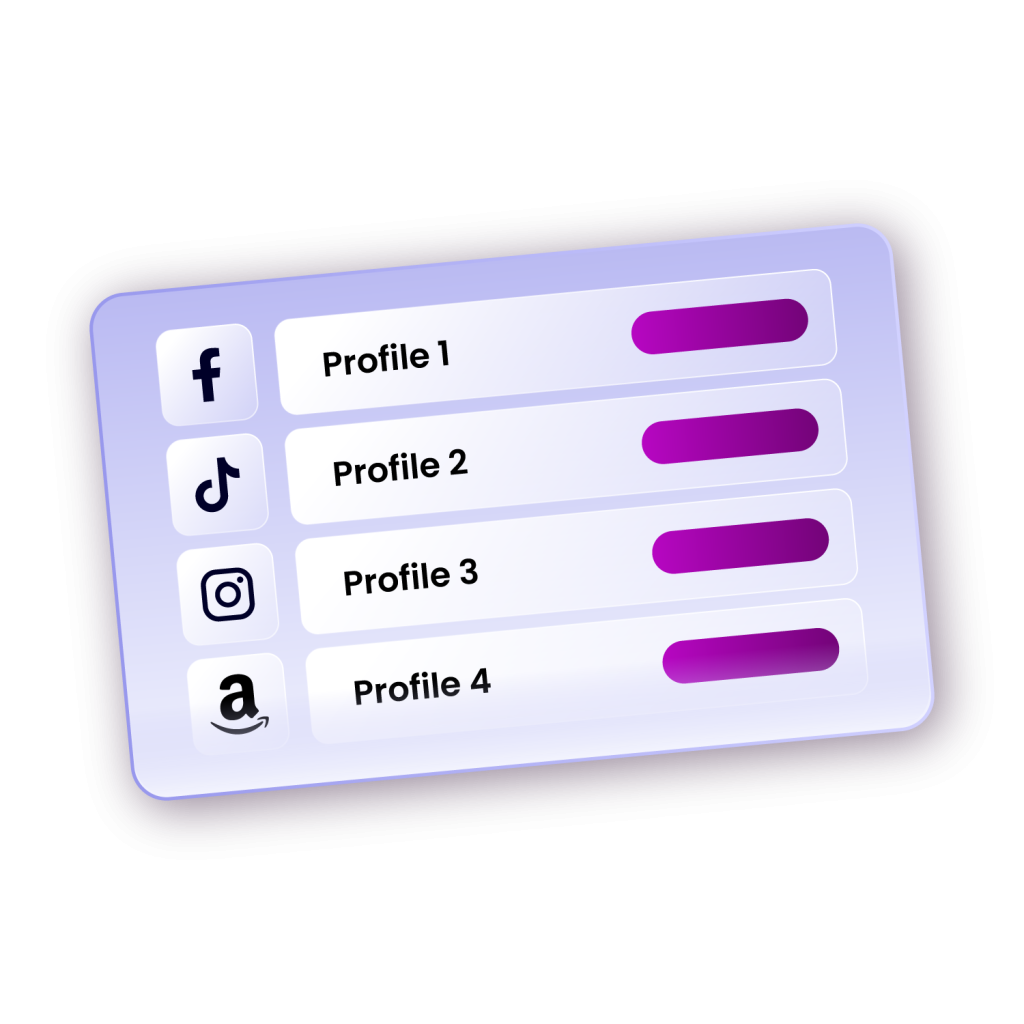
1. Profile Isolation: It creates completely isolated browser profiles. Each profile has its own separate storage, cookies, cache, and—most importantly—a unique, spoofed browser fingerprint.
2. Fingerprint Spoofing: Incogniton doesn't just block fingerprinting; it generates a realistic, coherent, and persistent alternative fingerprint for each profile. It modifies parameters like the user-agent, canvas and WebGL rendering, screen resolution, and timezone in a consistent way that appears natural to websites. The spoofed fingerprint remains the same every time you open that specific profile. This prevents the "random shirt change" effect that simple randomization tools create, which itself is a red flag.
3. Proxy Integration: You can attach a unique proxy to each profile, giving it a distinct IP address and geographic location that aligns with its spoofed fingerprint (e.g., a New York IP with an English-US language setting).
This approach doesn't just hide you; it allows you to create multiple, fully separated digital personas. To a website, each Incogniton profile appears as a distinct, real user on a distinct device.
Conclusion
The distinction between a browser fingerprint and a device fingerprint is fundamental to understanding modern digital tracking. Your browser fingerprint is your software persona—malleable but detailed. Your device fingerprint is your hardware anchor—persistent and broad. Together, they form a powerful composite identity that tracks you across the web and apps with frightening accuracy.
Standard privacy tools like incognito mode or basic VPNs are no longer sufficient against these techniques. True privacy and operational security in 2024 require a strategic approach that involves managing your fingerprints, not just hiding your IP.
By using specialized tools like anti-detect browsers, you shift from being a passive target to an active manager of your digital identities. You gain the ability to present different, credible fingerprints for different purposes, whether for privacy, business, or research. In an era of ubiquitous tracking, understanding and controlling your fingerprints is not just a technical skill—it's a essential form of digital self-defense.