
A few years ago, scaling ad spend was mostly an optimization problem. Spend more, tweak your creatives and bids, and watch the results. Today, the bottleneck is different. Across Meta, Google, and TikTok, the dominant constraint isn't performance—it's account trust.
Advertising platforms now treat trust as a continuously evaluated signal. Accounts are scored over time, based on history, behavior, compliance patterns, and internal risk models. New or not-well-trusted accounts face spending caps, slower approvals, and sudden restrictions that have nothing to do with campaign quality.
Agency ad accounts are one response to this shift. Among providers in the space, GDT Agency has positioned itself as a long-term, compliance-oriented partner rather than a quick-access workaround.
This review examines how the rental model fits the current ad ecosystem, what it actually solves, and where GDT Agency sits in this risk–incentive landscape.
The Market Shift: From Optimization to Trust Management
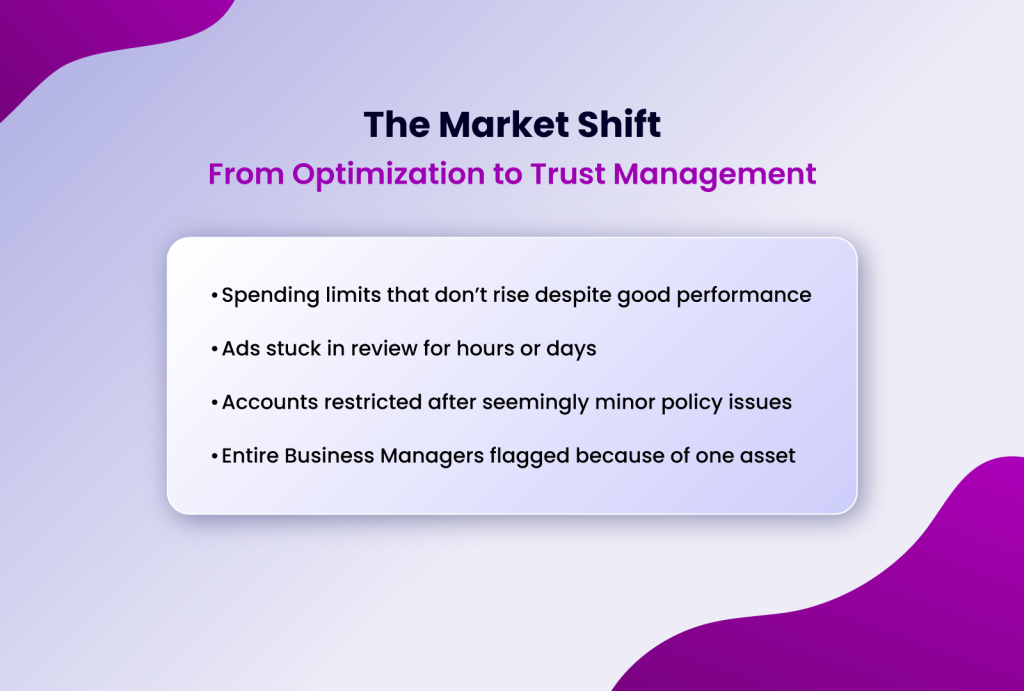
Modern ad platforms no longer evaluate accounts in isolation. They assess patterns across time, regions, payment behavior, and policy interactions. As a result, many advertisers experience friction that feels opaque:
- Spending limits that don’t rise despite good performance
- Ads stuck in review for hours or days
- Accounts restricted after seemingly minor policy issues
- Entire Business Managers flagged because of one asset
These are not bugs. They are outcomes of systems designed to prioritize platform safety and advertiser reliability at scale.
In this environment, account history and institutional trust matter as much as creative or targeting skill. That is the gap agency ad accounts are designed to fill.
What GDT Agency Actually Does
GDT Agency is an advertising partner providing agency ad account rental services for Facebook (Meta), Google Ads, and TikTok Ads.
Instead of issuing new advertiser accounts, GDT grants access to established agency accounts operated under verified business entities with documented histories and ongoing management. These are not disposable assets; they are part of a maintained agency infrastructure designed to remain in good standing with the platforms they operate on.
The practical outcome is access to ad accounts with:
- Higher baseline trust
- Greater spending capacity
- Faster ad approvals
- Fewer early-stage enforcement triggers
The Rental Model, Explained Through Incentives
GDT’s model is rental-based. Advertisers do not buy or own the accounts—they rent access while GDT retains ownership and operational responsibility.
This distinction is not cosmetic; it defines incentives.
When a provider sells accounts outright, their incentive ends at delivery. When a provider rents accounts they continue to own, their incentive is to keep those accounts healthy over time. Compliance, maintenance, and platform relationships become part of the provider’s core business, not an afterthought.
For advertisers, this translates into:
- Lower upfront cost compared to building agency infrastructure
- Flexibility to scale usage without owning fragile assets
- Reduced exposure of personal or client Business Managers
- Ongoing oversight by a team whose business depends on account longevity
This incentive alignment is one of the clearest differentiators between structured providers and riskier account sources.
Platform Coverage and Account Types
GDT Agency maintains agency ad accounts across the major advertising platforms, each aligned with the platform’s trust and verification requirements.
Meta (Facebook & Instagram)
- Meta‑whitelisted agency ad accounts
- Verified Business Managers
- High or effectively unlimited spending limits
- Clean compliance histories
- Strong internal trust signals
These accounts are designed for advertisers who have outgrown personal or newly created ad accounts, especially under sustained spend.
Google Ads
- Advertiser‑verified agency accounts
- Regional presence across major markets
- Proven billing and spending capacity
- Suitable for search, display, YouTube, and performance formats
TikTok Ads
- Established agency advertiser accounts
- Higher creative approval reliability
- Fewer early-stage restrictions
- Greater spend flexibility than standard new accounts
Across platforms, the value proposition is consistent: history over novelty, stability over experimentation.
How GDT Agency Operates at Scale
GDT Agency operates at a level that suggests institutional usage rather than small-batch experimentation.
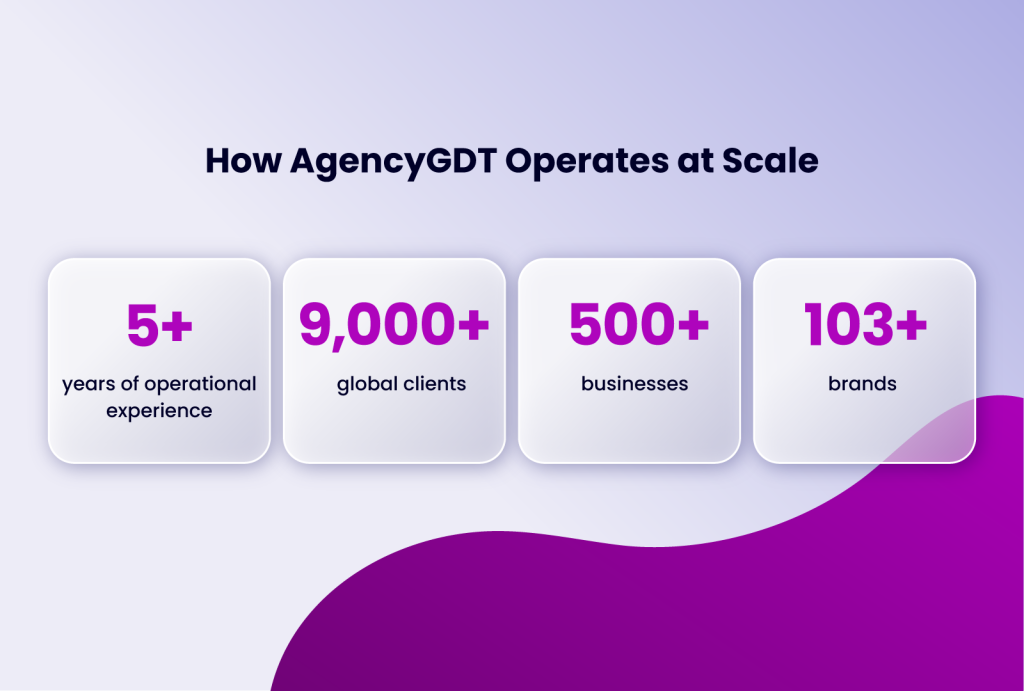
According to published figures:
- Founded in 2021 with 5+ years of operational experience
- 9,000+ global clients supported
- 500+ businesses and 103+ brands across 18 countries
- Over $16 million in Facebook ad spend per month flowing through its infrastructure
Reported performance outcomes from advertisers migrating to agency accounts include lower CPA ranges, improved ROAS, and revenue growth—results that are highly execution-dependent, but indicative of accounts operating without early-stage constraints.
Operational Characteristics That Matter in Practice
Beyond access, several operational details influence day-to-day viability:
- Onboarding speed: Accounts are typically ready within 24 hours
- Replacement policy: Accounts encountering issues are replaced to reduce downtime
- Capacity: More than 1,000 new accounts opened per month, supporting growth
- Low Disable Rate: Reported at approximately 5%
- Approval velocity: Average ad approval times under 12 hours
For advertisers running continuous spend, these factors directly affect revenue continuity.
Pricing Transparency and Risk Containment
GDT Agency emphasizes published terms and transparent pricing, reducing ambiguity around fees and usage conditions.A defined refund policy for unused balances, with returns processed within 7–10 business days, further limits downside risk—particularly important for advertisers testing agency infrastructure for the first time.
Where Incogniton Fits in This Stack
Agency ad accounts address platform trust. They do not, on their own, solve identity linkage.
Meta’s Business Suite centralizes control but also centralizes risk. Assets are linked under one identity, and enforcement can cascade.
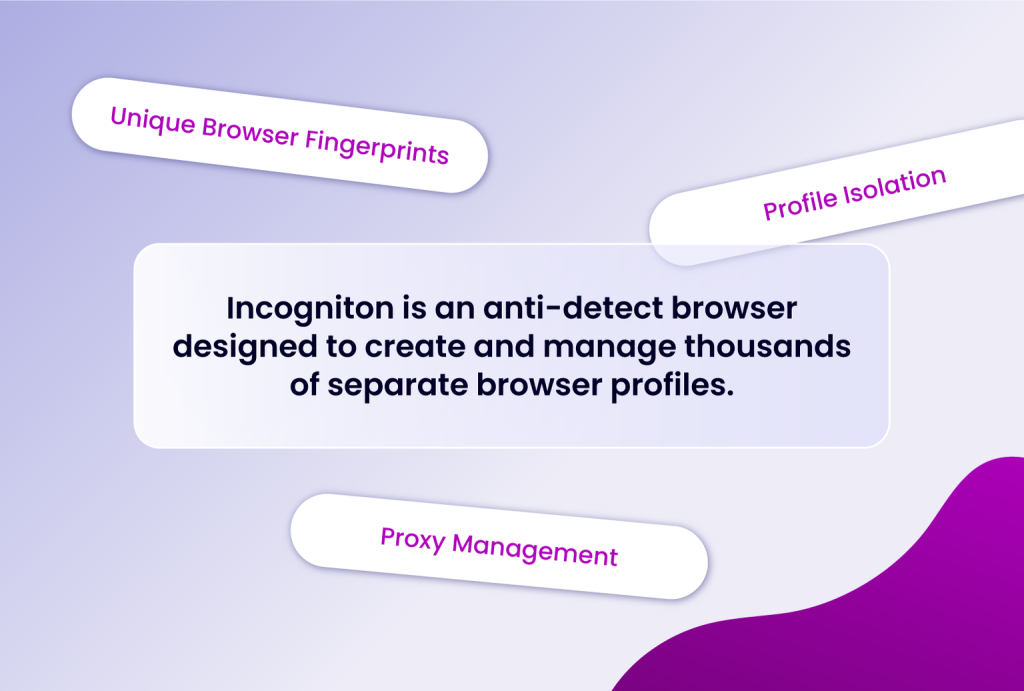
Incogniton approaches the problem differently. Each GDT Agency account can be accessed through a separate isolated browser profile, with its own fingerprint, cookies, and proxy context, as repeatedly outlined in the Incogniton documentation. Accounts remain operationally independent even when managed by the same team.
This separation is particularly relevant for agencies handling multiple clients or regions, where compartmentalization reduces systemic exposure.